

ultimate-guide
All Inclusive Family Vacation Tips: A 2026 How-To Guide
Travelin' with Theresa · Sep 30, 2026 · 15 min read
Table of Contents
- What You Need Before You Book an All Inclusive Family Vacation
- Step 1: Choose the Right Resort for Your Family Size and Ages
- Step 2: How to Find the Best Vacation Deals Without Getting Burned
- Step 3: Build a Packing List for All-Inclusive Resorts That Covers Everyone
- Step 4: Master All-Inclusive Resort Tipping Etiquette
- Step 5: Handle Dining, Excursions, and Daily Schedules Like a Pro
- Step 6: Avoid These Common All Inclusive Family Vacation Mistakes
- Frequently Asked Questions
Last Updated: September 30, 2026
What You Need Before You Book an All Inclusive Family Vacation
An all inclusive family vacation bundles lodging, meals, drinks, and most on-site activities into one upfront rate, making it one of the easiest ways to travel with kids. At Travelin' with Theresa, we have planned these trips, and the families who enjoy themselves most did their homework first.
That homework starts with paperwork, not resorts.
Documents, Insurance, and Travel Logistics
Get every traveler's documents in order before you compare a single resort. Passports for children expire faster than parents expect, and many destinations require six months of validity beyond your return date. Check the U.S. State Department international travel guidance for current entry requirements, then make copies of every passport and store them separately from the originals.
Step 1: Choose the Right Resort for Your Family Size and Ages
Match the resort to your family's actual composition, not the photos. A property that delights a family with a toddler can frustrate a family with three teenagers.
Start with these filters:
- Ages of your children. Dedicated kids club programs are usually split by age band, so confirm your children fall inside a band rather than between two.
- Room configuration. Connecting rooms, suites with bunk beds, and family units with kitchenettes solve different problems. Ask specifically what sleeps your group in one booking.
- Beachfront versus garden view. The price gap is real, and for families who spend the day at the pool it rarely pays off.
Room Configuration and Kids Club Options
Ask two questions before you commit: how many people does this exact room type sleep, and what are the kids club hours? A room marketed as sleeping five may mean two adults and three small children in beds that will not work for teenagers, and a club that closes at midday changes how you plan lunches and naps.
Step 2: How to Find the Best Vacation Deals Without Getting Burned
The best vacation deals come from timing and flexibility, not the flashiest advertised rate. Resort pricing moves with school calendars, so traveling the week before or after a school break often costs less for the same property.
- Decide your travel window and rank three possible weeks.
- Compare package pricing that includes flights and transfers, not room rates alone.
- Ask whether the rate includes resort credit, which many properties apply to spa, dining, or excursions.
- Confirm what the all-inclusive wristband actually covers before you compare two offers.
Step 3: Build a Packing List for All-Inclusive Resorts That Covers Everyone
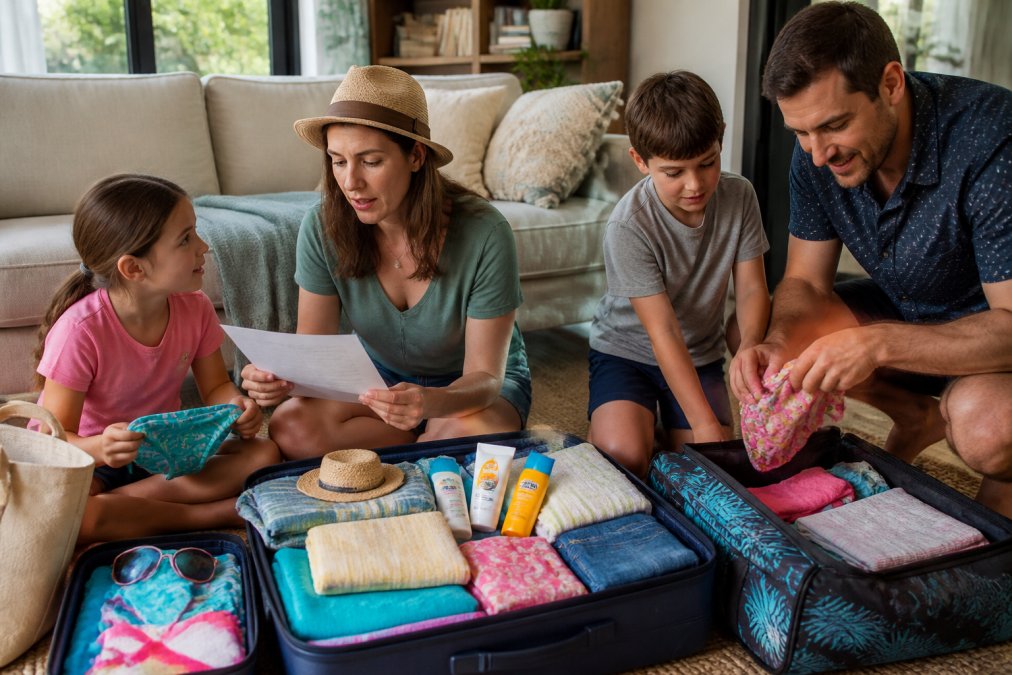
Pack for the resort's actual environment, not a generic beach trip. All-inclusive properties sit in humid, sunny climates where children burn through clothing faster than parents plan for, and on-site shops charge accordingly. The list below covers standard essentials, then goes further for families most guides ignore: children with sensory sensitivities, dietary or medical requirements, and multi-generational groups.
The Core List Every Family Needs
- Two swimsuits per person, so one dries while the other is worn
- Reef-safe sunscreen, after-sun lotion, and lip balm with SPF
- Refillable water bottles for every family member
- One nicer outfit per adult for restaurants with a dress code
- A small first-aid kit with children's fever reducer and motion sickness tablets
- Copies of travel documents, kept in a separate bag from the originals
Packing for Sensory Needs and Neurodivergent Travelers
Most packing lists assume every child will happily eat unfamiliar food, sleep in a strange bed, and tolerate a loud buffet. For neurodivergent kids, the resort environment itself is the challenge, not the flight. A few additions change the trip:
- Noise-reducing headphones or ear defenders for buffet halls, pool decks, and evening entertainment, which are the three loudest recurring spaces at most properties.
- Sunglasses and a brimmed hat for children sensitive to bright light, since pool glare is constant.
- A comfort item, familiar blanket, or small pillow from home. New bedding textures are a common sleep disruptor.
- Preferred snacks and a familiar cup or straw for children with strong food-texture preferences. Buffet lines rarely accommodate this on short notice.
- A visual schedule or printed daily card showing meals, pool time, and quiet time. Predictability reduces meltdowns more than any single item.
- Weighted lap pad or compression shirt if your child uses one at home; these are difficult to source on arrival.
Medical, Dietary, and Multi-Generational Additions
- A written medication list with generic drug names, dosages, and prescribing physician contact, kept with the passports. Brand names differ outside the country and a local clinic will need the generic name.
- Allergy cards in the local language if anyone in the group has a serious food allergy. Resort kitchens can usually accommodate, but only when notified in advance and reminded at each meal.
- Prescription refills in original labeled containers for the full trip plus a buffer of several days.
- Grandparent-specific items if extended family is joining: a folding cane or walking stick, a compact travel pillow, and a printed list of any mobility limitations shared with the resort in advance so a ground-floor or elevator-adjacent room can be assigned.
- A shared digital folder with everyone's passport photos, insurance cards, and emergency contacts, accessible to every adult in the group.
Snack Mapping, Hydration, and Sun Protection
Plan where snacks and water come from before the first afternoon meltdown. Most resorts keep a cafe or pool bar open between meals, but the walk from the far pool can be long. Pack familiar snacks from home for the flight and first evening.
Step 4: Master All-Inclusive Resort Tipping Etiquette
All-inclusive resort tipping etiquette is simpler than most first-timers fear: gratuities are not required, but they are appreciated and improve service. The wristband covers your food and drinks, not the people who bring them.
A workable approach:
| Who | When | How Much |
|---|---|---|
| Bartender | Per round or end of day | $1-2 per drink |
| Server | End of meal | $2-5 per meal |
| Housekeeping | Daily | $2-5 per day |
| Kids club staff | End of stay | $10-20 total |
| Shuttle or transfer driver | Per trip | $2-5 per bag or trip |
Step 5: Handle Dining, Excursions, and Daily Schedules Like a Pro
Build a loose travel itinerary and defend it loosely. Families who schedule every hour burn out by day three, and the resort experience rewards spontaneity.
Buffet Etiquette and Itinerary Flexibility
Buffet etiquette at a family resort comes down to three habits: take one plate at a time, keep children within arm's reach at the line, and never take food you cannot finish.
Step 6: Avoid These Common All Inclusive Family Vacation Mistakes
The mistakes repeat across many families. Avoiding them costs nothing and changes the entire trip. The list below covers standard pitfalls, then adds the ones most guides skip: multi-generational logistics, sustainable-travel missteps, and health planning.
The Standard Pitfalls
- Booking the cheapest room category for a family of five. The room will not fit, and upgrades at check-in cost more than booking correctly upfront. Confirm the exact sleep count for the exact room type before deposit.
- Ignoring the resort map. Distance from the pool, beach, and restaurants determines how much walking your family does every day. Request the map before booking and pick a building accordingly.
- Skipping travel insurance to save a little. One missed connection or illness wipes out the savings several times over. Confirm the policy covers medical evacuation, not just trip cancellation.
- Overpacking. Laundry service exists at most properties, and nobody uses half of what they bring.
- Forgetting the dress code. A few resort restaurants require long pants or closed-toe shoes at dinner, and families get turned away. Check the dress code for every restaurant at booking, not on arrival.
- Not confirming shuttle service times. Arriving after the last shuttle means paying for a private transfer.
Multi-Generational Group Mistakes
Traveling with grandparents, cousins, or two households in one booking adds failure points a parents-plus-kids trip never hits:
- Assuming one room block will work for everyone. Different bed preferences, mobility needs, and sleep schedules mean the group should book adjacent rooms, not identical ones. Ask the resort to link the reservations so the group is placed together.
- Planning every meal as a group. Three generations rarely agree on dinner timing. Build in at least two independent meals so no one feels held hostage to the group's slowest eater or earliest riser.
- Splitting the bill informally. Decide before departure how excursions, tips, and any off-property meals will be divided. A shared digital expense sheet avoids awkward mid-trip conversations.
- Forgetting mobility logistics. Confirm elevator access, step-free routes to the pool and beach, and whether the resort shuttle can accommodate a wheelchair or walker. Not every all-inclusive property is fully accessible, and the booking page rarely says so.
Sustainable-Travel Mistakes
Large resorts generate significant waste, and families who care about their footprint often arrive without a plan:
- Assuming the resort recycles. Ask at check-in whether the property has a recycling program and where the bins are. Many do, but guests are not told.
- Buying single-use water bottles daily. Bring refillable bottles and locate the refill stations on day one.
- Booking excursions through the first vendor on the beach. Resort-arranged excursions are more likely to use licensed local operators with environmental guidelines. Ask whether the tour operator is locally owned and whether wildlife interactions follow responsible-practice standards.
- Skipping the local economy. A resort stay can be entirely self-contained. Budget one meal or one market visit off-property to put money directly into the community.
Health-Planning Mistakes
- Not knowing where the nearest clinic is. Ask the front desk on arrival for the resort's on-call doctor, the nearest hospital, and whether the property has a nurse on site. Write it down; you will not want to search for it during an emergency.
- Assuming your health plan travels with you. Most domestic plans offer limited or no coverage outside the country. Confirm before departure and carry your insurance card plus a copy of the policy's emergency contact number.
- Waiting until a child is sick to find a pharmacy. Locate the nearest pharmacy on day one and note its hours. Resort gift shops carry limited over-the-counter options at premium prices.
A close second is arriving without a plan for a sick child. A resort clinic visit for a routine illness can cost far more than a travel insurance policy that would have covered it, and the nearest hospital may be a long drive from the property.
Frequently Asked Questions
Are you supposed to leave tips at all-inclusive resorts?
Yes, tipping is customary at all-inclusive resorts even though gratuities are often included in the vacation package. Budget a few dollars per drink, a few dollars per day for housekeeping, and a bit more for servers at sit-down restaurants. Bring small bills in the local currency or US dollars, since ATMs and front-desk change can be limited. Tipping is never required, but it goes a long way toward better service and a more personal experience during your all inclusive family stay.
What should you pack for an all-inclusive family vacation?
A solid packing list for all-inclusive resorts includes swimsuits (two per person), cover-ups, reef-safe sunscreen, aloe vera, bug spray, refillable water bottles, and a small first-aid kit. Add dress-code outfits for evening dining, water shoes for rocky beaches, and a tote bag for pool days. Pack medications, travel documents, and chargers in a carry-on. Families with young kids should bring familiar snacks, a nightlight, and a lightweight stroller if the resort is spread out.
How do you find the best deals on all-inclusive family vacations?
Booking early or during shoulder seasons (late spring and early fall) usually yields the best rates. Compare package pricing that bundles flights, transfers, and resort credit rather than booking each piece separately. Watch for resort credit promotions and free-kids-stay-free offers. A travel advisor with access to nationwide contracts can often secure insider pricing that public booking sites do not show, and they can flag cancellation policies before you commit. Travelin' with Theresa leverages nationwide contracts and deep industry relationships to provide clients with insider pricing that online booking sites simply cannot match.
What mistakes should families avoid when booking an all-inclusive resort?
Common mistakes include picking a resort based on photos alone, ignoring room configuration for larger families, and not checking whether kids club and on-site activities match your children's ages. Skipping travel insurance leaves you exposed if flights are disrupted. Overpacking the itinerary with excursions causes travel stress. Confirm dining reservation policies, dress codes, and shuttle service details before you book so there are no surprises on arrival.